

Showing all 34 resultsSorted by latest
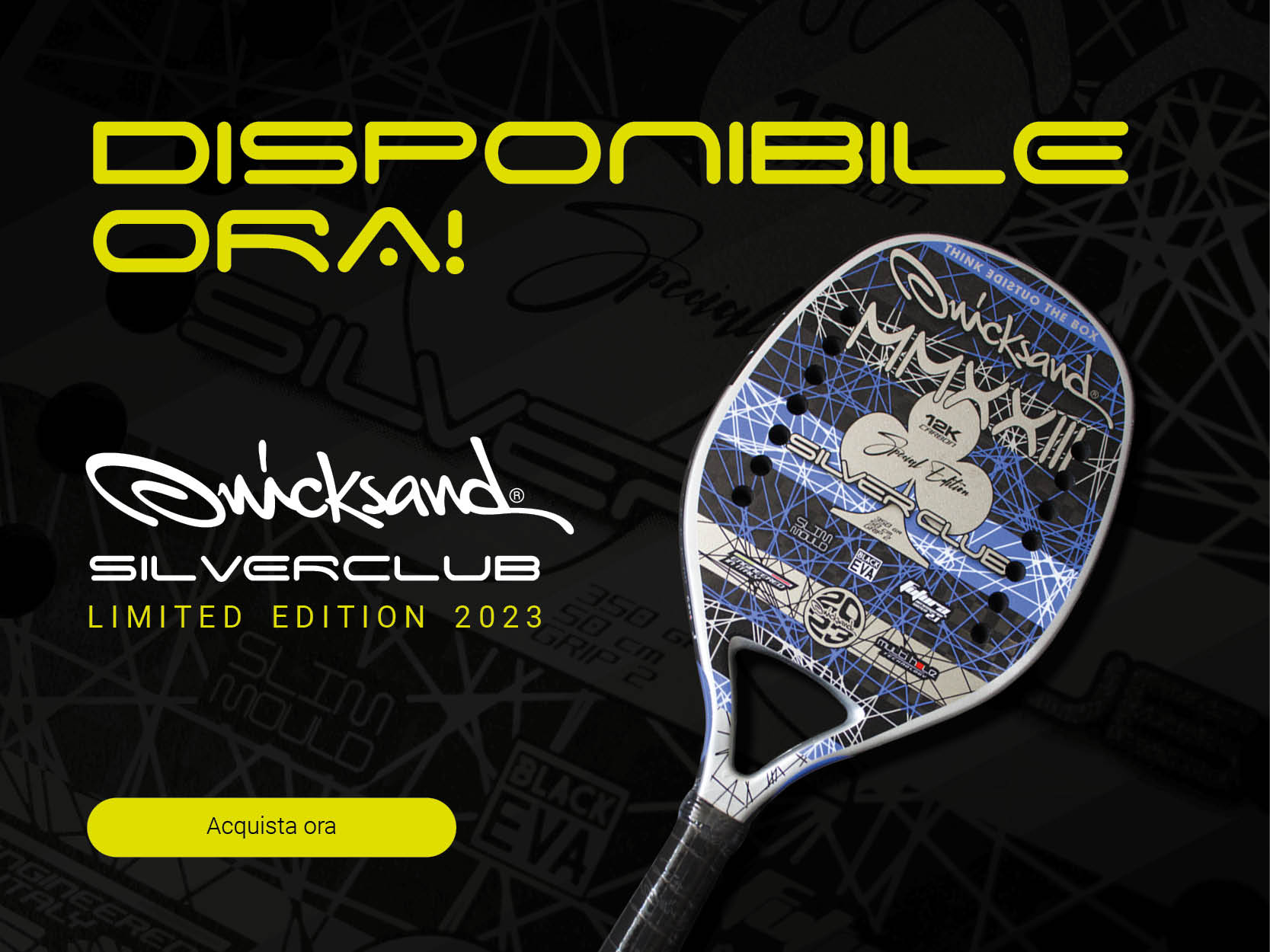
Silverclub Limited Edition 2026
Silverclub Limited Edition 2024
What Are the Features of a Beach Tennis Racket?
Beach tennis rackets are engineered for high performance on sand. Unlike traditional tennis rackets, they are stringless and built with materials that deliver durability, lightness, and effective vibration dampening.
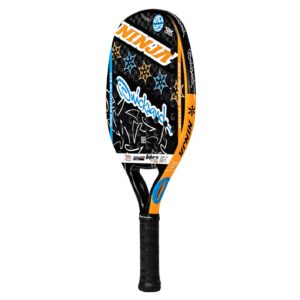
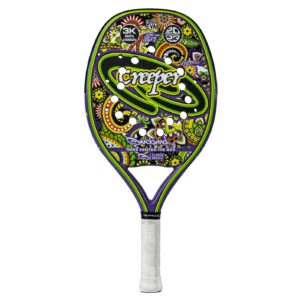
Key characteristics include:
- Solid, perforated face to improve aerodynamics
- Compact construction for greater shot control
- Technical materials (carbon, fiberglass, Kevlar) for strength and comfort
- Lightweight design to boost maneuverability and reduce fatigue
- Specific balance tailored to different playing styles
How to Choose the Right Beach Tennis Racket
Selecting the ideal beach tennis racket depends on several factors: skill level, materials, weight, balance, and personal style. Every player is different, so weigh these variables carefully to find the best match.
Playing Level
- Beginners: opt for light rackets in fiberglass or more flexible carbon (e.g., Carbon K3)—easy to handle with good vibration absorption.
- Intermediate: choose well-balanced models with mixed materials and increased stiffness to enhance both power and control.
- Advanced / Professional: look for full-carbon or Kevlar rackets with thicker profiles and advanced technologies for top-tier performance and powerful shots.
Racket Materials
The material drives a racket’s stiffness, power, control, and comfort:
- Fiberglass: softer and more flexible—ideal for beginners.
- Carbon K3 / K12 / K18:
- K3: more flexible and comfortable.
- K12: stiffer for more explosive shots.
- K18: very high rigidity and precision.
Carbon-based rackets are best for an advanced game and suit experienced and professional players.
- Full Carbon: a balanced blend of power and control.
- Kevlar: boosts durability and impact resistance.
Racket Weight
Weight directly affects maneuverability and shot power:
- Junior (ages 6–12): 225–275 g.
- Adults: 325–345 g.
- Lighter → greater agility, reduced fatigue.
- Heavier → more power, higher stability.
Racket Balance
Balance indicates where the racket’s mass is concentrated:
- Handle-heavy (~25.5 cm): better control and maneuverability. Great for a technical, precision-oriented style.
- Head-heavy (~26 cm): increases shot power. Ideal for an aggressive, attacking game.
Discover the Futura 1.0, 2.0, and 2.1 System
The Futura system is an innovation applied to beach tennis rackets (and later to padel rackets) designed to reduce impact vibrations by up to 80%, protecting joints like the wrist, elbow, and shoulder.
Key Features
- Compatible with 20–26 mm profiles
- Insertion of a ring in the throat of the racket that disperses vibrations before they reach the handle
- Enhances comfort without compromising playability, power, or control
Thanks to its innovative design, the Futura system also improves precision and long-term durability. It’s used on padel rackets as well, with a 38 mm profile.
Beach Tennis vs. Padel Rackets: What’s the Difference?
Although they may look similar at first glance, beach tennis rackets and padel rackets are engineered for entirely different playing needs.
- Beach tennis rackets are generally thinner (profile 20–24 mm), with a light, compact build for a fast, dynamic game on sand. Designed for quick volleys, they prioritize maneuverability and control.
- Padel rackets have a thicker profile (around 36–38 mm) and are slightly heavier. Because padel is played on a smaller, enclosed court where the bounce is integral, these rackets are built to absorb impact and generate powerful shots with greater stiffness.
In short, beach tennis favors light, agile rackets for all-volley play, while padel prefers solid, thicker rackets for a more tactical game with rebounds off the walls.
Beach Tennis vs. Pickleball Rackets: Key Differences
Pickleball rackets also differ markedly from beach tennis rackets in both construction and match dynamics.
- Pickleball is played on a hard surface with a perforated plastic ball and a flat, solid paddle—usually made of plastic, graphite, or light composites. Paddles are not perforated and have no strings, supporting a more strategic, less explosive style than beach tennis.
- In beach tennis, play is on sand with pressurized Stage 2 balls and perforated faces on the racket for better aerodynamics and control. The game is fast, dynamic, and entirely on the volley—the ball never bounces.
The core difference lies in the court type and rules: pickleball leans on control and bounces, whereas beach tennis is an acrobatic game where power and quick reflexes are essential.